How much a BI tool for marketing and sales costs
Understand the four blocks that make up the price of a BI tool for marketing and sales, and how to compare proposals without getting lost in the final number.
Published on
4 min read

How much a BI tool for marketing and sales costs depends less on the vendor chosen and more on how many cost blocks go into the calculation. The monthly license fee is only one of them, and usually the smallest. The real budget shows up when you add up implementation, organization of the source data, and the time of your own team that is left over or missing after the tool is live.
The blocks that make up the price of a BI tool
Every BI proposal for marketing and sales usually has up to four components, not always explicit in the first meeting. The subscription or license is the recurring amount for using the tool. Implementation is the payment, usually one-time, to configure integrations, import history, and structure the funnel inside the platform. Ongoing consulting, when it exists, covers adjustments and new questions after the basics are already working. And the fourth block rarely appears in the proposal: the time your own team spends organizing data that the tool does not organize on its own.
This last point is what distorts the comparison between proposals the most. A lower monthly fee that requires a dedicated analyst for weeks to fix the database almost always ends up costing more than a higher monthly fee that already delivers organized data.
Why the list price is almost never the final price
Data volume, number of integrations, and number of users change the final price of practically any BI tool. Two companies of the same size can receive very different proposals if one already has a CRM in place and the other still depends on a spreadsheet, or if one needs to integrate three paid media channels and the other seven. Comparing just the final number of two proposals, without knowing what each one includes, is comparing different things as if they were equal.
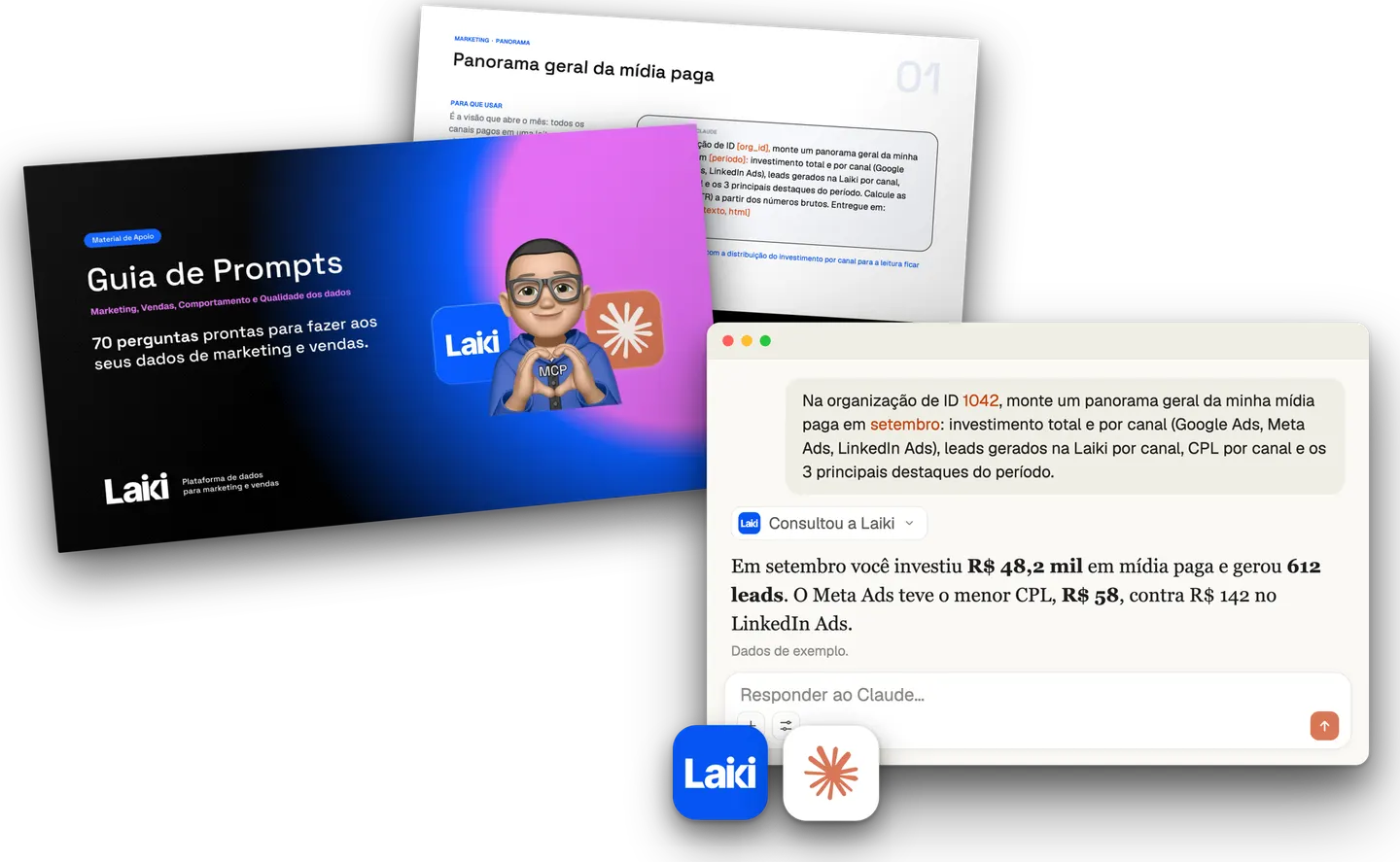 Resource · In PortuguesePrompt Guide for Marketing and Sales70 prompts with questions about marketing, sales and behavior to ask your data.Download the guide
What really pushes the budget up or down
- Volume of events and data. More leads, more deals, and more interactions processed per month tend to raise the contracted plan.
- Number of integrations needed. Each additional source (paid media, CRM, legacy spreadsheet) may come as part of the package or as a separate item, depending on the vendor.
- Organization of the source data included or not. If recognizing the same lead across different channels and standardizing fields is part of the service, the price tends to be higher, but your team's time goes down.
- Ongoing support versus a closed project. Follow-up after implementation costs more in the monthly fee and less in rework when the operation changes.
- Commitment terms and cancellation fees. Contracts with no commitment tend to compete on the value delivered, not on the commercial bond.
How to budget without getting lost in competitors' numbers
Ask for at least two proposals covering exactly the same scope (same sources, same volume, same support expectations) before comparing prices. Ask, block by block, what is included in the monthly fee and what is implementation billed separately. A proposal that details the four blocks without fluff tends to generate fewer budget surprises in the following months than one that only shows a final number.
Laiki's model
Laiki charges a monthly subscription, with no commitment and no cancellation fee, with plans defined by the monthly volume of events processed. Implementation, with integrations, collection, and team training, is a one-time payment separate from the monthly fee. There is a 30-day usage guarantee with a window for a full refund, and data consulting and advisory as an optional service, for those who want follow-up beyond what the platform already solves on its own. The current prices of each plan change over time, so the always-reliable reference is the current pricing page, never a number quoted in an article.
Frequently asked questions about the cost of a BI tool
Is BI for marketing and sales expensive?
It depends on what is included. A tool with a low monthly fee that leaves data organization to your team can cost more in hours of work than one with a higher monthly fee that already delivers it ready.
Do I need to pay for consulting on top of the tool?
Not necessarily. Ongoing consulting is usually an optional service, useful when the operation wants follow-up beyond the standard support included in the subscription.
Is there a guarantee if the tool does not work for my operation?
Vendors that charge for a long commitment and a cancellation fee normally do not offer one. The absence of a commitment, combined with a refund window, is a sign that the vendor stands behind the value delivered.
The right question is not the number, it is what it includes
Before comparing proposals by the final price, break each one into the four blocks: subscription, implementation, consulting, and your team's time. It is this comparison, not the isolated number, that shows which tool truly fits your operation's budget. Discover Laiki's data consulting and advisory and see how this follow-up works in practice.