BSUID on WhatsApp: what changes in marketing and sales data management
WhatsApp is replacing the phone number with the BSUID as the contact identifier. Understand the impact on attribution and on the marketing and sales CRM.
Published on
5 min read
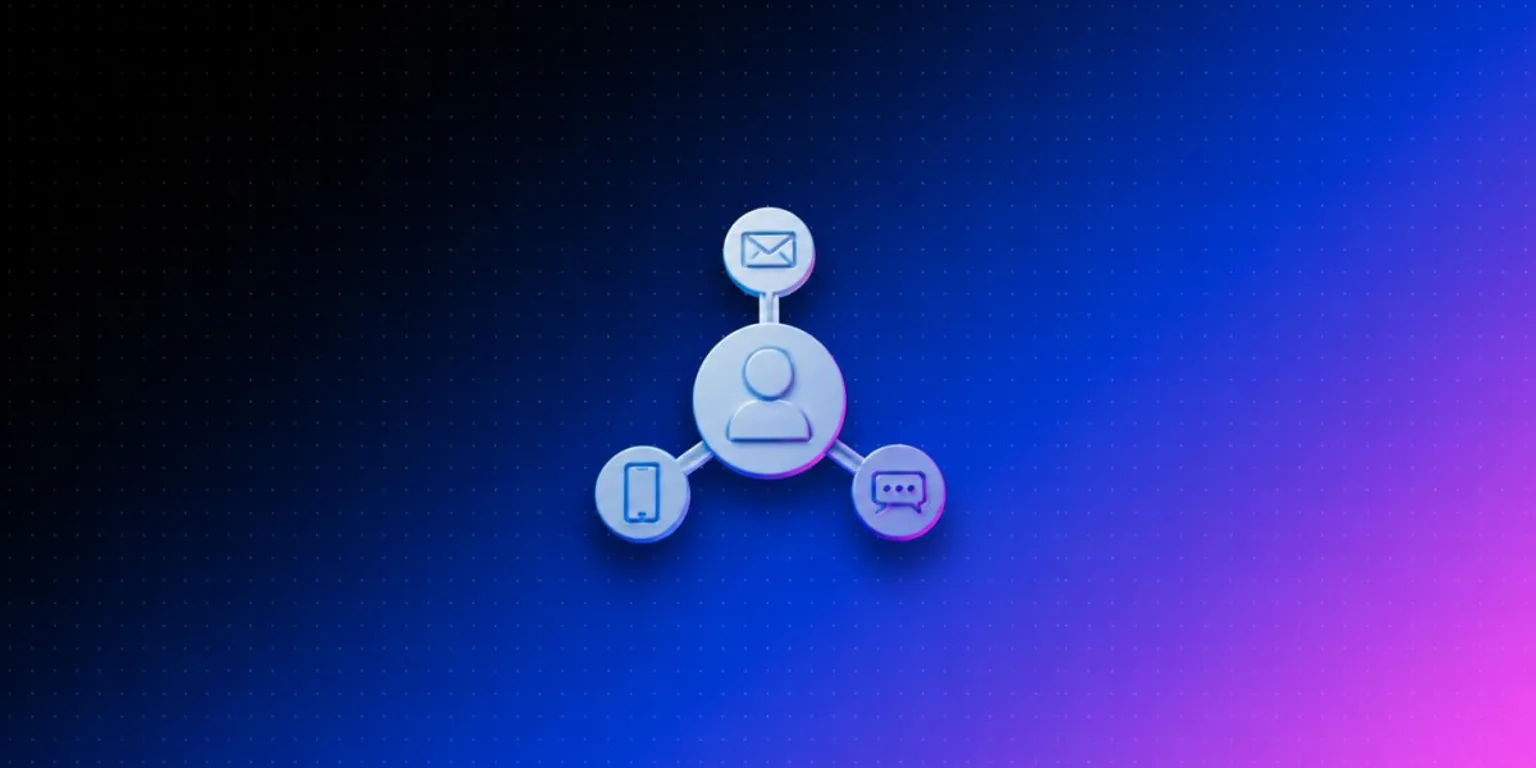
WhatsApp is moving away from treating the phone number as the only way to identify a customer. With the arrival of usernames (@name), Meta introduced the BSUID, short for Business-Scoped User ID: a code that now represents the relationship between a person and a specific company, even when the phone number is not shared. For anyone working with marketing and sales data, this is not limited to the API. It is a change in the very key that ties the lead to their history.
What the BSUID (Business-Scoped User ID) is
The BSUID is generated by Meta for each user-company pair. The same person has a different BSUID for each business they talk to on WhatsApp, and a company cannot use a customer's BSUID to find out who they are at another company. The design exists to preserve privacy: less cross-tracking between operations, more user control over when the phone number is exposed.
In practice, the fields that today always carry a phone number in the official API webhooks, from and to, can carry a BSUID instead, from the moment the customer adopts a username. The phone number still exists as contact data, but it is no longer guaranteed as an identification key.
Timeline of the change
Meta is rolling out the change in waves, and some milestones have already happened:
| Date | What happens |
|---|---|
| End of March 2026 | BSUID already appears in webhooks, even for those not yet using a username |
| May 2026 | The API starts accepting messages sent directly by BSUID |
| June 29, 2026 | Username reservation opens globally |
| July 7, 2026 | First group of countries gets access to usernames (wave 1) |
| Starting in September 2026 | Expansion to the rest of the world, including Brazil |
There is no single date when the phone number is switched off. The change happens username by username, as each person activates the feature, which is optional.
Three things that break when the phone number disappears
Contact deduplication. If the CRM uses the phone number as the key to know whether a lead already exists in the database, a contact who arrives via username without sharing the number can become a new record, even if they have already talked to the company through another channel.
Media attribution. A Click to WhatsApp campaign that today closes the funnel on the lead's phone number loses that reference when the click comes from someone with an active username, and the cost-per-lead report for that channel becomes incomplete.
Continuity of service. A sales team that opens the conversation without knowing who is on the other side, because the history was linked to the old number, treats a known customer as if they were a new contact.
The impact hits high-volume operations first: teams that depend on Click to WhatsApp campaigns to generate leads, sales teams that close most deals through the app, and recurring service operations, where the conversation history is part of the value delivered to the customer. The higher the volume of contacts by username, the faster the attribution and deduplication problem shows up in the reports.
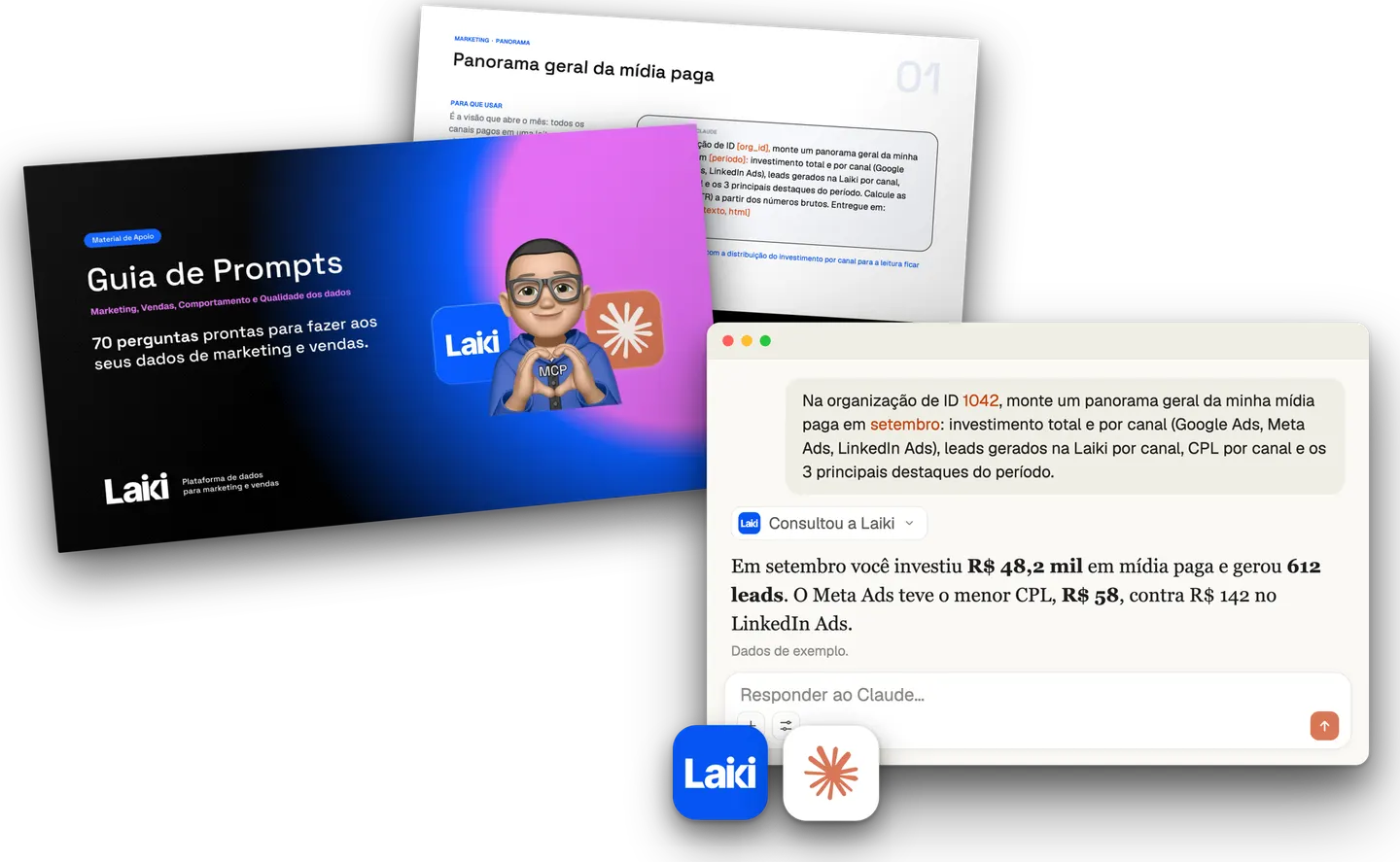 Resource · In PortuguesePrompt Guide for Marketing and Sales70 prompts with questions about marketing, sales and behavior to ask your data.Download the guide
How to prepare without losing the lead's history
The starting point is to stop treating the phone number as the only identity key. The BSUID needs to be captured and associated with the other identifiers the operation already has: email, internal CRM ID, source UTM, within a marketing and sales data management organized in layers. This is exactly the problem the Laiki ID Combiner solves, with identity resolution in three layers: even when the phone number, the email, and the BSUID arrive at different times, the platform recognizes that it is the same person and keeps the funnel and the media attribution intact, regardless of which identifier arrived first in the conversation.
It is worth reviewing three points before username adoption reaches Brazil, expected from September 2026: whether the CRM or automation platform already processes the BSUID field in webhooks, whether there is deduplication logic that considers more than one identifier at the same time, and whether the media attribution report depends exclusively on the phone number to close the funnel. All three are cheap to review now and expensive to discover broken in the middle of a running campaign.
Frequently asked questions about the BSUID on WhatsApp
Does the BSUID replace the phone number?
Not entirely. The BSUID starts appearing in webhooks when the customer uses a username, but the phone number is still captured in conversations started by the customer, within the recent interaction window, and in code-based authentication messages, which do not change structure.
Is the BSUID the same at every company the customer contacts?
No. Each user-company relationship generates its own BSUID, which prevents a company from identifying the same customer in another business portfolio.
When does this affect operations in Brazil?
Username reservation opened globally on June 29, 2026, but adoption by country happens in waves. The first group, released on July 7, 2026, did not include Brazil; expansion to the rest of the world is expected from September 2026.
Do I need to switch CRMs to deal with the BSUID?
Not necessarily. The critical point is not the CRM itself, but the identification logic it uses. A data platform that combines phone number, email, and BSUID in a single customer profile solves the problem without requiring a switch of the sales tool already in use.
The identifier changes, the business question stays the same
BSUID, phone number, and email are three different ways of answering a question that does not change: who is this person, and what have they done with your operation so far. When the data is organized to answer that question regardless of which identifier arrived first, the change in the WhatsApp API stops being a risk and becomes just one more source to integrate. Discover the Laiki ID Combiner and test for 30 days how three-layer identity resolution keeps your marketing and sales funnel intact, with or without the BSUID.